GSBA Vision & Mission

MISSION: To combine business development, leadership and social action to expand economic opportunities for the LGBT Community and those who support equality for all.
Showing posts with label interview. Show all posts

Thursday, February 28, 2013

Providing Hope. Giving Opportunity. Changing Lives.


This month over 100 volunteers came together to begin the inspiring, yet difficult, journey of selecting the 2013 GSBA Scholars. This is an experience that goes on to change not only the lives of students, but also change the lives of volunteer interviewers. The chance to read such personal accounts of aspirations, challenges, and resilience stay with our interviewers for a lifetime. We are grateful to have such a unique group of interviewers. We have volunteers from every letter of the alphabet ranging from 23-77 years old. Retired professors, Microsoft recruiters, Boeing engineers, AmeriCorps members and even a police chief - we are thankful for the investment our volunteers are making in the GSBA Scholarship Fund!

In recent years, as the need for financial support from our LGBT and allied students has increased, so has the interest in becoming more involved with the GSBA Scholarship Fund. The now-coveted honor of selecting the next class of GSBA Scholars is no easy task.  The three-step process begins with an orientation which provides training on issues such as diversity, gender and sexuality, interviewing skills, and team expectations and dynamics. Each team of five-to-seven volunteers is led by a facilitator who is there to answer questions, manage conflict and to make sure that the interview process flows as smoothly as possible.

This year, we were fortunate to welcome back Sid Jordan and Finn Cottom from Reteaching Gender & Sexuality. This innovative group presents fresh perspectives on gender and sexual diversity. Sid and Finn’s interactive and thought-provoking training focused on rethinking the popular narratives about gender and sexuality. Together the group focused on intersecting identities, queer youth action and resilience, creating more liberating spaces, and institutional accountability. This training prepared our interviewers to begin reviewing scholarship applications with an open-mind and a fresh understanding of what it means to be queer in today’s world.

With a toolbox full of knowledge, our interviewers have begun the painstaking process of reading through the applications and will meet in late March to choose the applicants to invite for an in-person interview in April.The Selection Day process can be difficult for some teams and easy for others. Many times there are clear stars that rise to the top, but more times than not there are more stars than interview spots.

Three-time interviewer and former scholar Eddie Um says that the selection process "is very difficult because there are so many qualified students with unique life experiences that make it very challenging to decide who is most deserving of a scholarship. Thankfully, I have an amazing group of team members, whom I met during orientation, that will help me narrow down the applicant pool to two awardees. Everyone on my team brings their own perspective but share the same goal of finding the best representative that embodies the essence of the GSBA."

"Each year, I hope the decision of whom to grant scholarships to would get easier but it doesn't. There are amazingly talented students and leaders from very diverse backgrounds with fascinating dreams to fulfill ahead of them. Sadly for every scholarship we are able to grant, there are 3-4 who are just as worthy. It is an emotional process during the interview for both the scholarship committee and the candidates," says interviewer Carrie Caron. "This is an impactful program for our LGBTQ and Puget Sound community and especially to me. I feel inspired about our communities future given the talent of many of our recipients."

The Microsoft GLEAM team of GSBA Scholarship Fund interviewers

Thursday, December 13, 2012

R74 Retrospective: Interview with Lacey All


by Thomas Pitchford, member of the GSBA Public Policy Task Force

From your perspective as the Chair for the Washington United for Marriage campaign, what factors you would you attribute to our overall success?

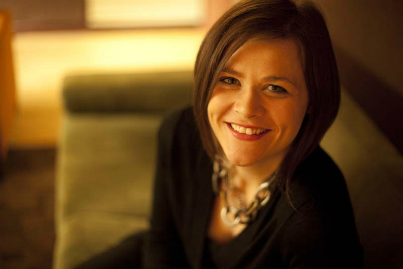
Photo care of Washington United for Marriage
We first had to understand the proper spirit in which to approach working together. By that I mean we knew the only way we could win was if the community worked together like we have never worked together before. Collaboration across a broad spectrum of local and national coalition partners was essential, as was the feeling that we were all working in the same direction. Our leadership team proved a tremendous asset as they moved immediately to put some strong leadership parameters in place.  This included both HRC local and national leaders as well as leaders across a coalition of dedicated organizational partners, including GSBA.

Additionally, facing 32/32 losses nationally, understanding the opposition was incredibly important. We needed to have a firm understanding of the range of messages that would be coming from the opposition, and be able to make the case for why voters should Approve Referendum 74. Persuading voters to support marriage equality required an entirely different framework than that needed to pass domestic partnership – and we anticipated would bring on a different reaction and fight from the opposition.

Many months of planning and hard work resulted in a tremendous campaign effort launched at first by seven paid staff as we sought to move the bill through the house and senate. Over the next seven months, that number would expand to over 60 paid staff members, deployed to work in one of seven action centers across Washington. Their extensive work resulted in a campaign field effort unmatched in the history of any campaign in the state as more than 50,000 volunteers were organized statewide.

Fundraising for the campaign also reflected a power in numbers – not only in meeting a $12.5M goal, but also through its number of donors. With the most common gift of $25, this was truly a campaign that captured the imagination of so many Washingtonians.

We worked closely with our experienced partners from around the country to frame a message that helped voters understand the importance of marriage equality in terms of basic human needs. Messaging about love, commitment and family, and communicating that these are values we all share, really put this message in perspective for Washingtonians.  We took the lessons from the past losses and used them to make sure we had a win here in Washington State.

Finally, some of our most significant support came from the Washington business community. In addition to the generosity of Jeff Bezos, Bill Gates, Steve Ballmer and so many other business leaders, many Fortune 100 companies across Washington joined us in affirming support for marriage equality. This was, without doubt, a tremendous influence in our success. As an employee of Starbucks, I could not be more proud to have their support as well as the support of so many other companies across the state.

I feel these factors really helped us capture the imagination of so many people across the state and build what became a coordinated effort not seen before in Washington.

Let’s talk about the role of the Human Rights Campaign, what partnerships were made along the way, and what future potential benefit do you see them providing for Washington’s LGBT community?

I am extremely proud of the coalition. We all worked in the same direction, and we all learned a lot along the way.

HRC was the single largest organizational contributor, with over $1.5M in financial and staffing contributions. Through working with our coalition partners we were able to build the infrastructure needed to make marriage equality in Washington a reality.  This included the work of Freedom to Marry at the national level, along with so many organizations including but not limited to ACLU of WA, Pride Foundation, Planned Parenthood Votes NW, ERW, Legal Voice, UFCW21, SEIU, and others who, without their involvement this would have not been possible.

In terms of our future here in Washington, we have built a significant coalition united around this effort. And this also presents a tremendous opportunity for us to continue to work on other issues affecting the LGBT community, something I have a great desire to see happen. At this morning’s Equal Rights Washington breakfast, Governor-Elect Inslee said it best: “This is the end of the beginning.” We have leveled the playing field in many ways, but there is still much left to be done. For now, we have an opportunity to step back and take a collective breath – and identify what’s next for Washington.

For the marriage movement, I believe HRC could use Washington as a model, and through building strong local partnerships pay those lessons learned forward, in particular for the marriage equality work soon happening in Hawaii, Rhode Island, and Illinois. 

Lacey All is the Director of Strategic Talent Initiatives at Starbucks Coffee Company and served as the Chair of Washington United for Marriage. She also is also on the Board of Directors for the Human Rights Campaign.